
Product
What Velapp Asks Before It Writes Your Plan
Published on August 13, 2026
Setup is eleven steps, and nine of them actually ask you something: the other two are an AI consent and a notifications prompt. That is still a lot before someone has run a step with you, and each one exists because something downstream cannot be computed without it. Here is the walkthrough, with the plan that came out at the end, from a real run through the app rather than a mockup.
The goal
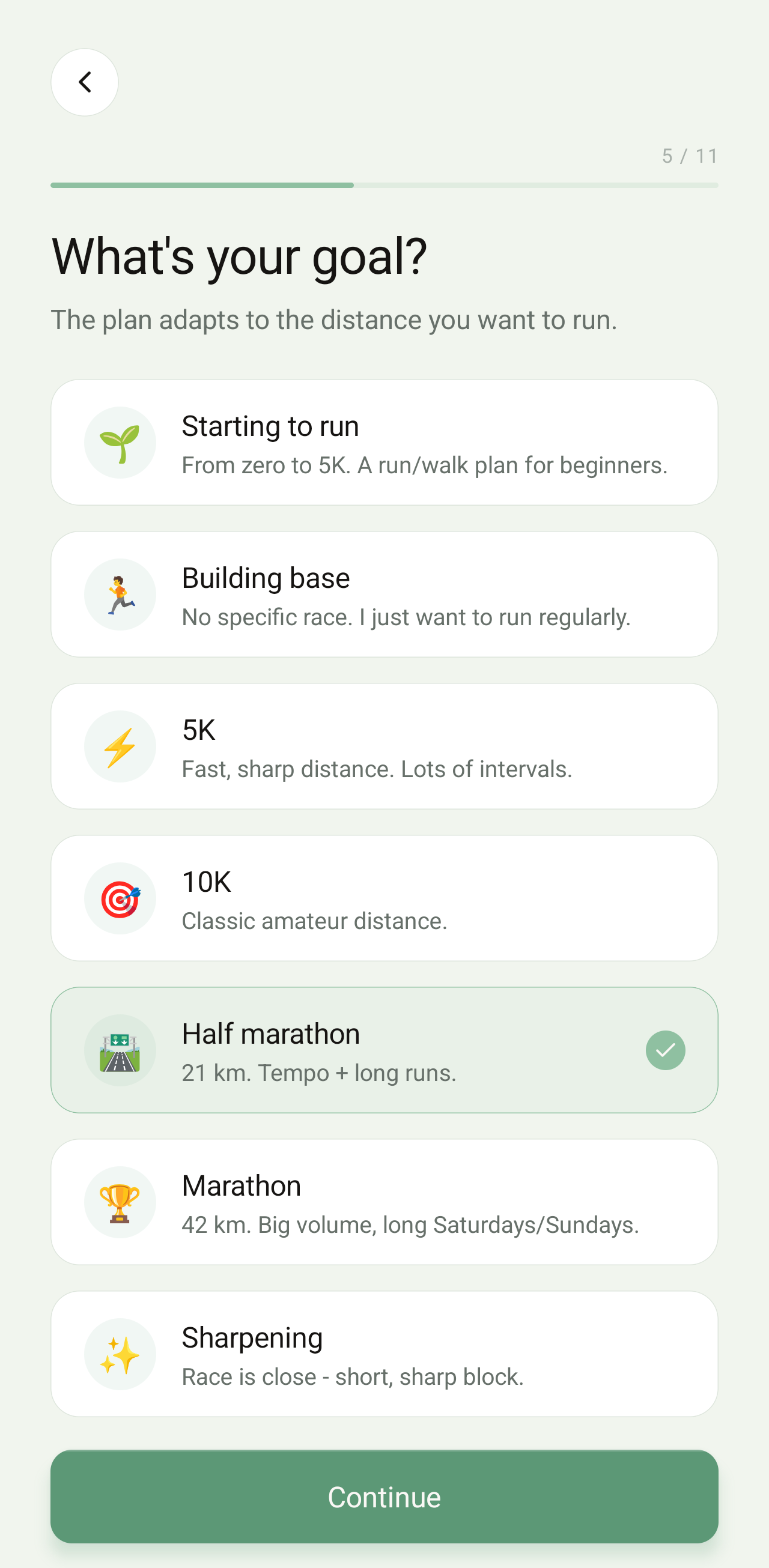
The obvious reading is that this sets how far you are training for. It does more than that. The goal, together with how many weeks remain, decides how the block gets divided into base, build, peak and taper, and those proportions are not the same for every distance. It also sets a ceiling on the long run, which is the session most likely to creep past what the rest of your week can support.
Picking "building base" with no race is a real option rather than a placeholder. It produces a plan with no taper and no peak, because there is nothing to peak for.
Age, weight, height
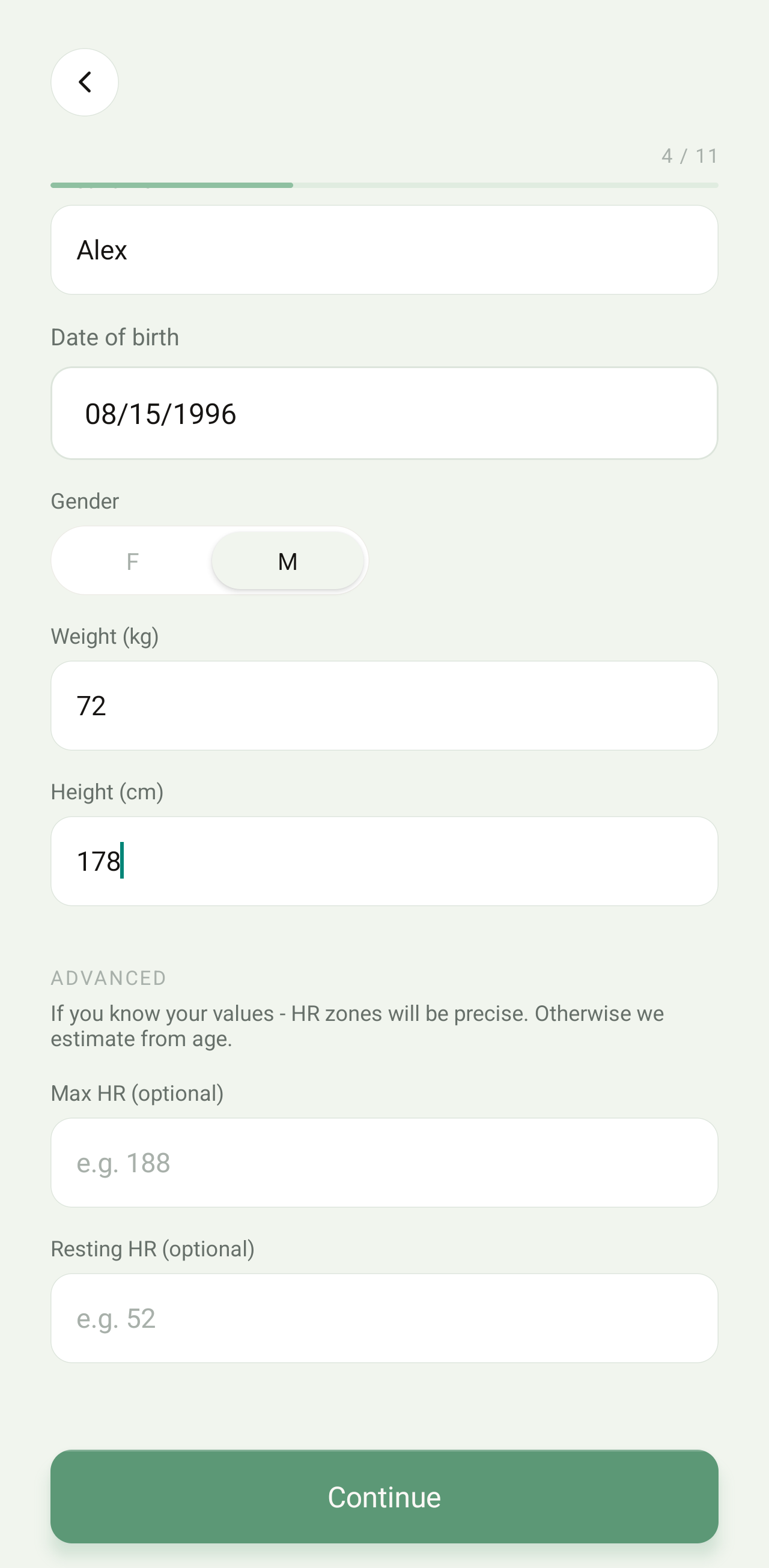
Date of birth is here for one reason: it feeds the maximum heart rate estimate, and every heart rate zone is derived from that. Velapp uses Tanaka rather than 220 minus age, which matters more the further you are from 40.
Weight and height do less work than people expect. They are not used to scale your paces. Nothing here is asked twice or asked for a form's sake, which is why the screen is short.
Your personal bests
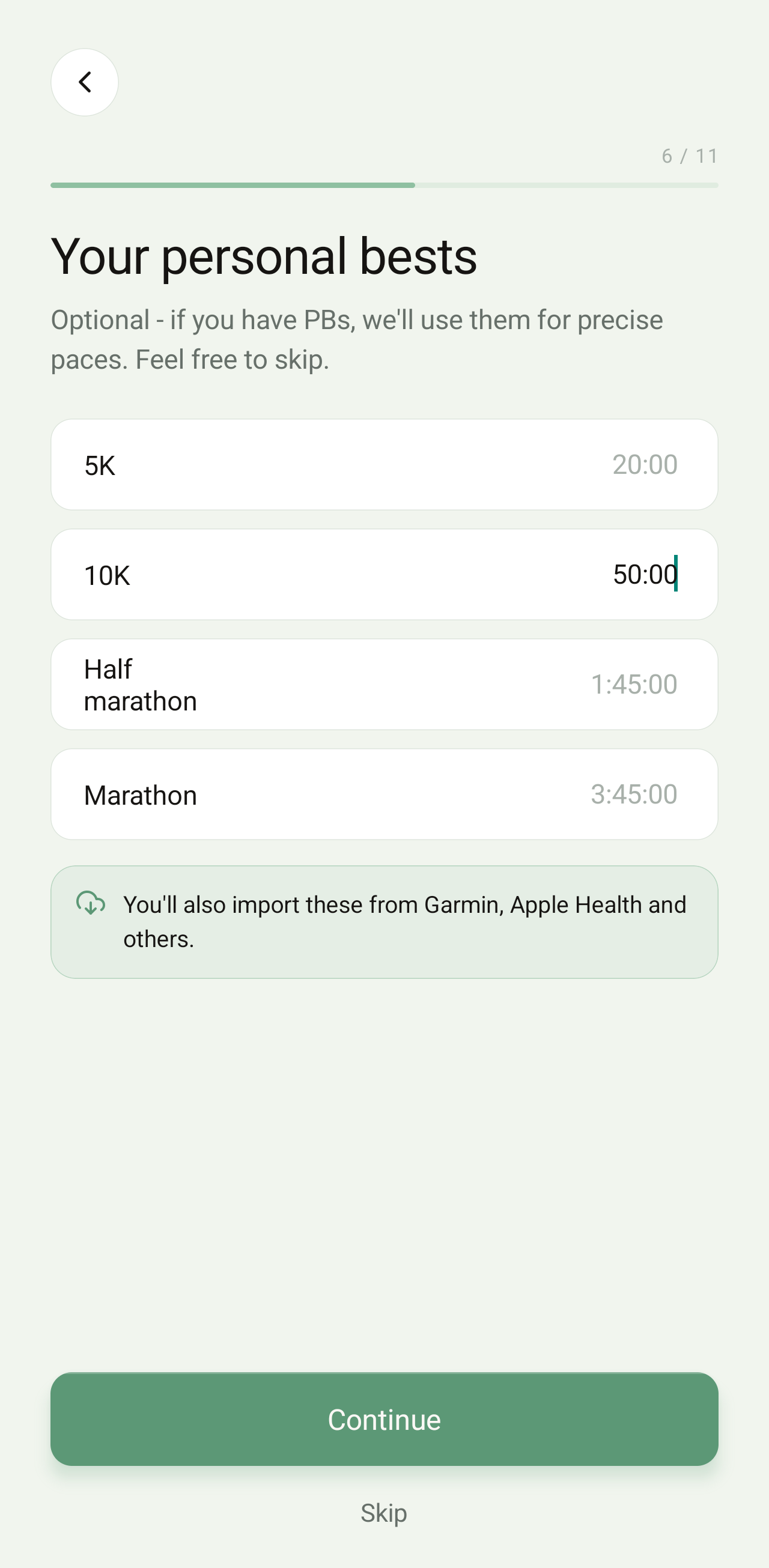
This screen is marked optional and it is the one that changes the most. A single race time yields a VDOT, and VDOT sets all five training paces. Skip it and the plan falls back to what your experience level implies, which is a category rather than a person.
For this run through I entered a 10 km in 50:00, which works out to VDOT 40. Hold that number, because it shows up again at the end.
Which days you run
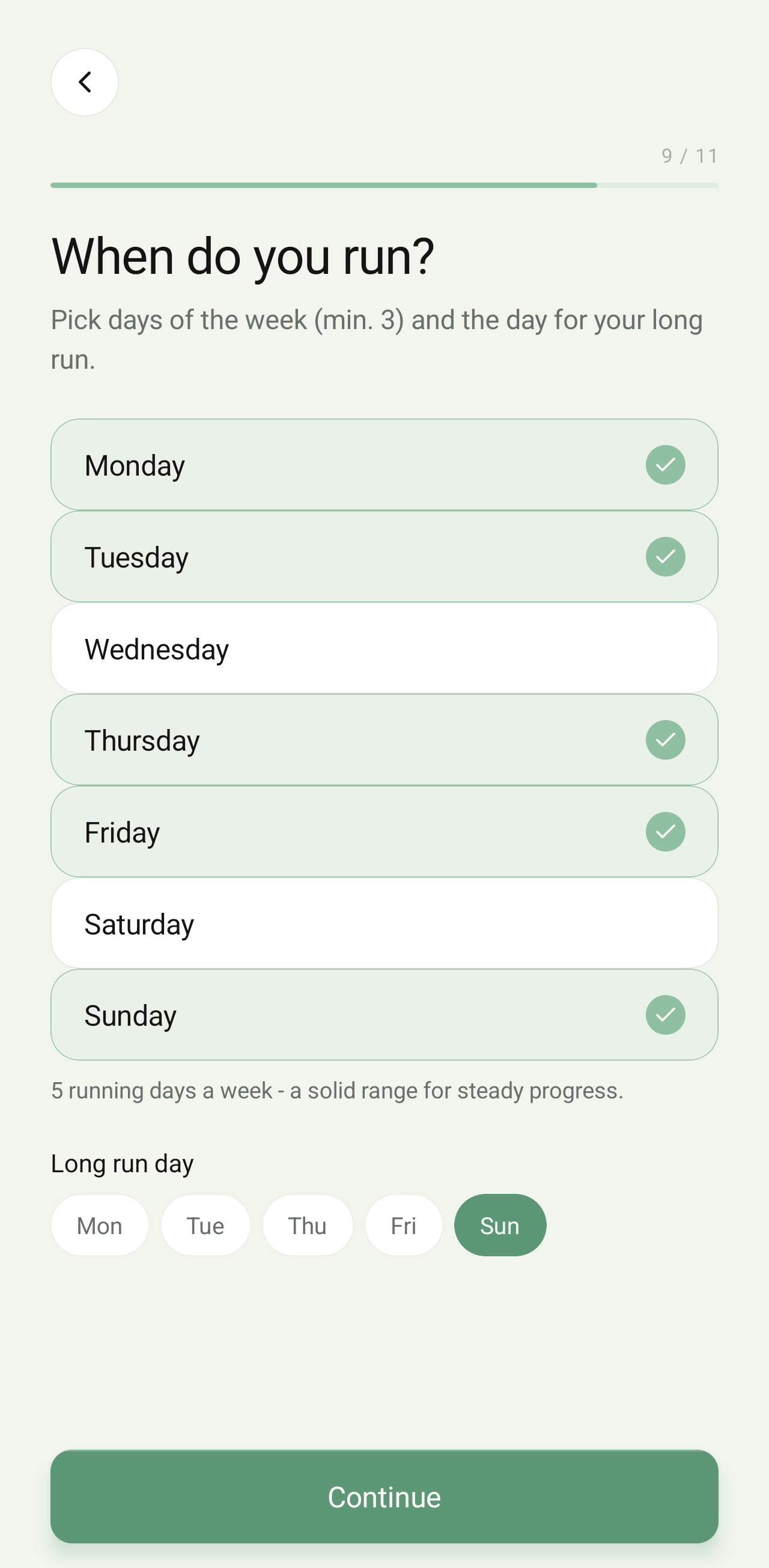
Two separate questions on one screen. How many days you run sets how the weekly volume is distributed, and marking the long run day anchors the week around it, because the long run is the session everything else is arranged to protect.
Three days is the minimum the app accepts. Below that a structured plan stops being meaningfully different from just going for a run, and pretending otherwise would be dishonest.
The plan it produced
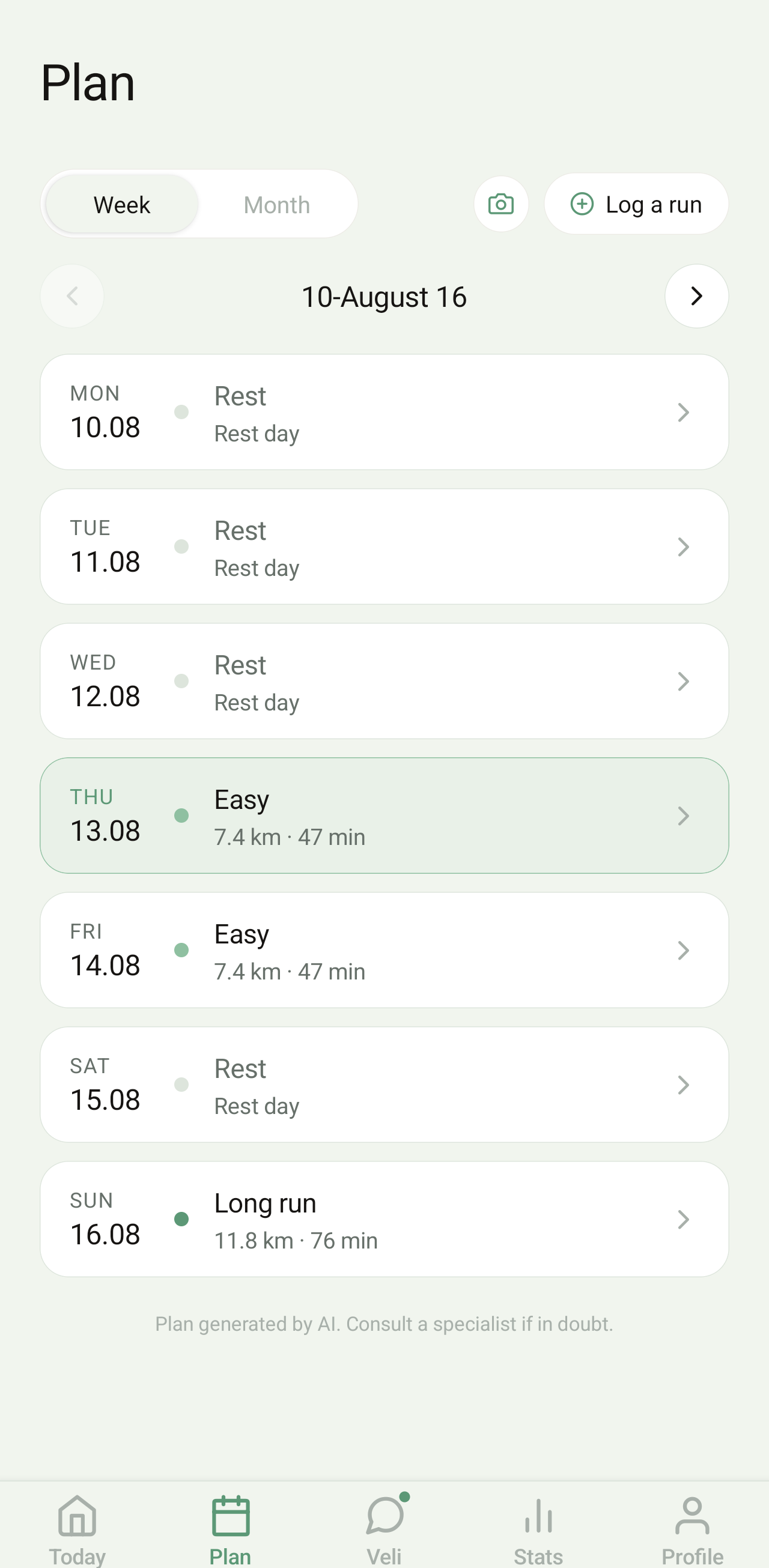
Two things in this screenshot are worth pointing at.
The first three days are rest, because the account was created on a Thursday. The plan starts from the day you finish setup rather than pretending your week began on Monday, which means the first week is always a partial one. The following week is a full seven days with a recovery run on Monday and a long run on Sunday.
Now the part I asked you to hold on to. The easy runs came out at 7.4 km in 47 minutes, which is 6:21 per kilometre. Daniels' table for VDOT 40 gives an easy pace of 6:25. That is the whole chain working end to end: a race time you typed became a VDOT, which became a pace, which became a distance and a duration on a Thursday. Nothing was tuned to make that line up, it is simply what the engine produces.
What it cannot know
- Your training history. Experience level is a coarse proxy. It does not know whether you ran 60 km a week last year or have not run since spring, which is why the volume ramp stays capped regardless of what you tell it.
- How you sleep and what your job does to you. Both change what you can absorb, and neither appears in a setup form. The daily check-in exists to catch this afterwards.
- What your legs feel like. Injuries are asked about as areas, not severity, and no form can substitute for a physiotherapist.
Setup produces a starting point that is calibrated rather than generic. Everything after that comes from runs you actually log.
In short
Most of those nine questions are cheap and change one thing each. The personal best screen is the one worth stopping for, because a single honest race time moves the plan from a category to a calibration, and it is the only screen the app marks optional.
Try it yourself
Setup takes a couple of minutes and the plan is generated the moment you finish. Scan whichever code matches your phone, or use the links below.

Keep reading
Product
What Veli Actually Knows About Your Training
An AI coach is only worth the context it has. What Veli reads before answering, and a real question answered from a plan built minutes earlier.
Product
How Velapp Builds Your Week
What decides each session, why the first week is short, and the easy pace that matched Daniels' table without being told to.