
Product
How Velapp Builds Your Week
Published on August 13, 2026
Setup runs to eleven steps and then produces a week. This is what happens in between, shown on a plan generated from a half marathon goal and a single 10 km time.
The first week is deliberately short
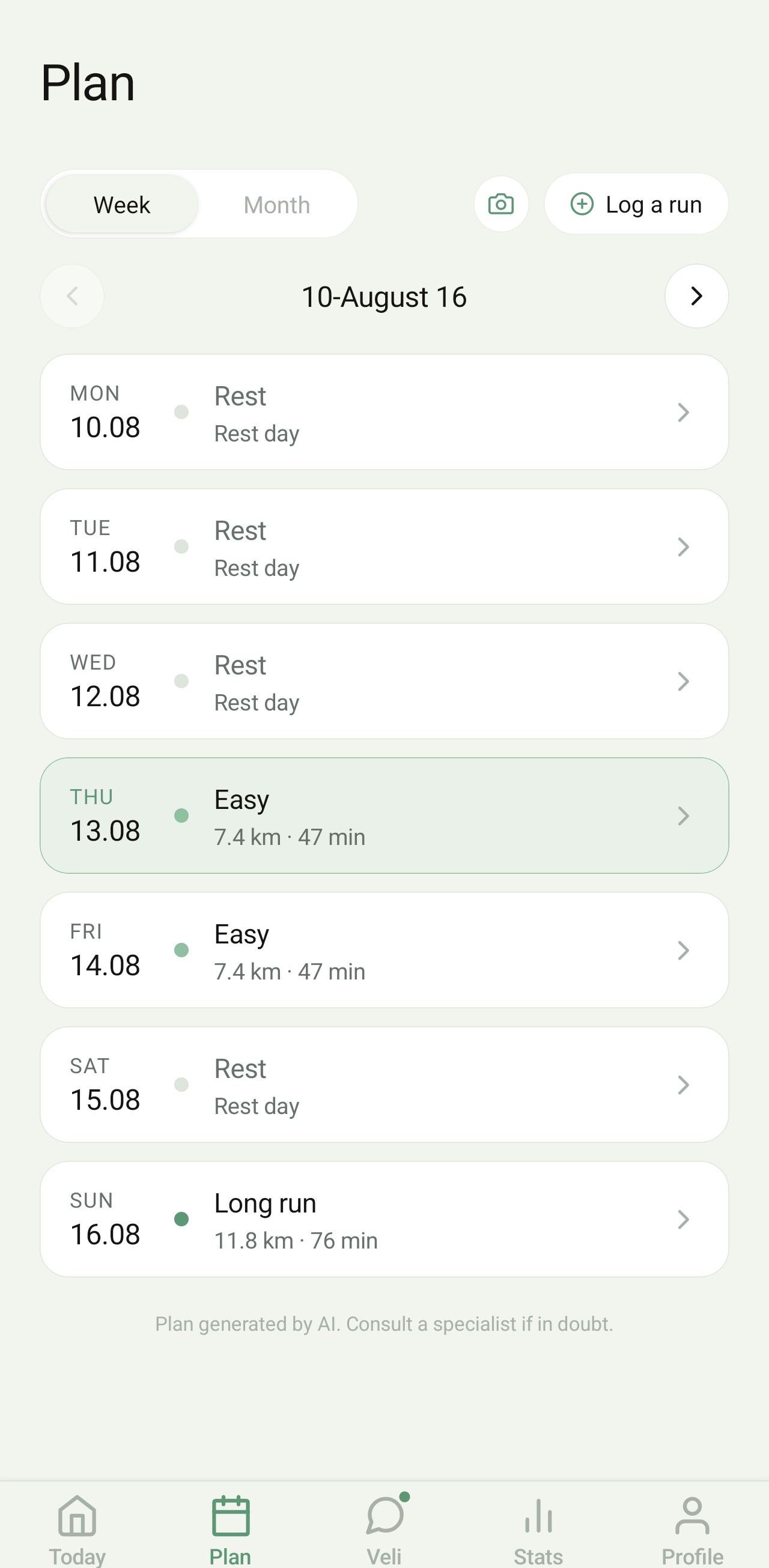
Monday, Tuesday and Wednesday are rest, which looks like an error until you notice the account was created on a Thursday. The plan starts from the day you finish setup rather than pretending your week began on Monday, so the first one is always partial.
The alternative would be to backfill three sessions you never did and then measure adherence against them, which is a good way to make somebody feel behind on day one.
A full week, once it gets one
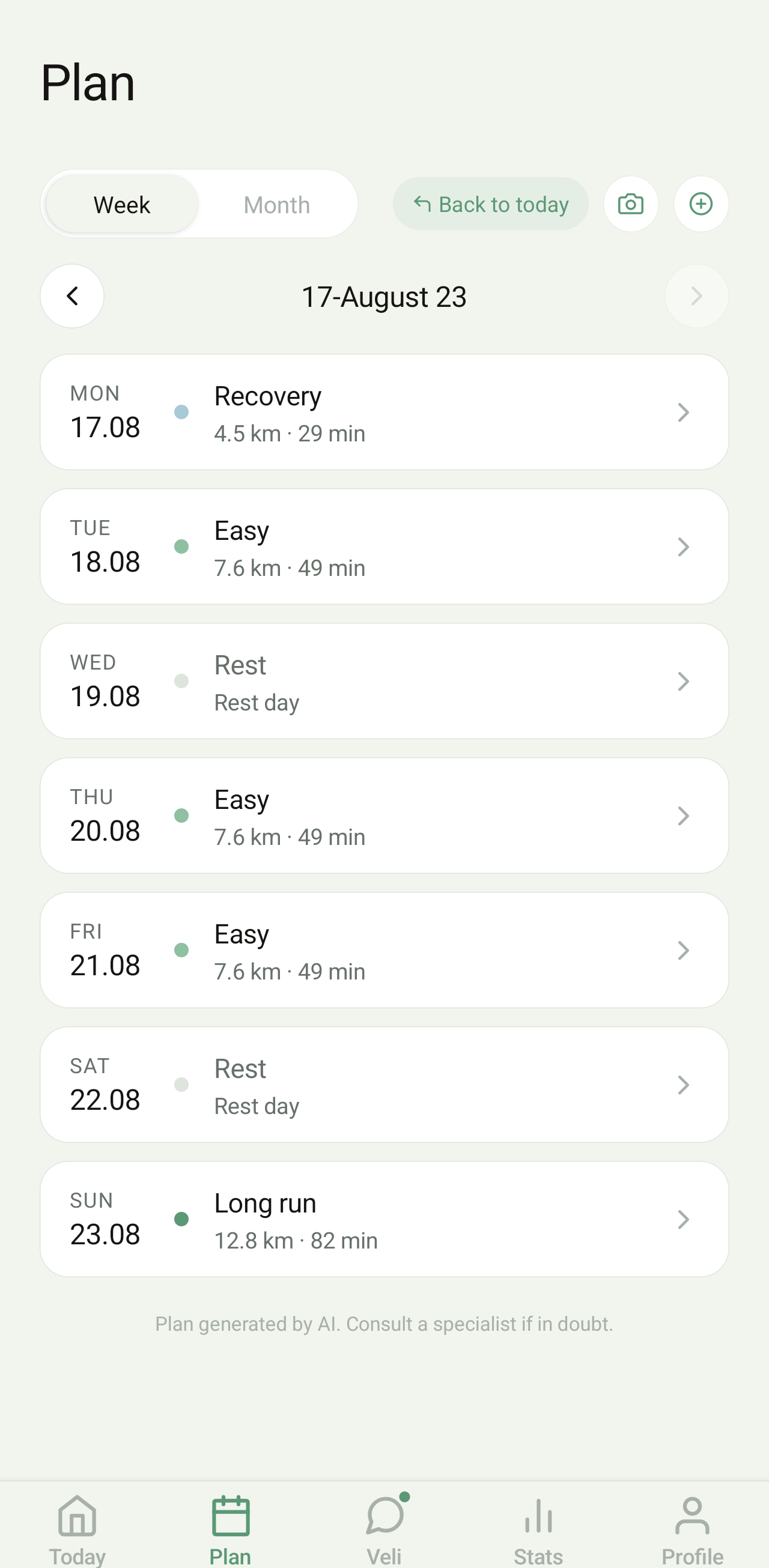
Recovery on Monday after the long run, easy days through the middle, the long run anchored to the day marked at setup. The long run is the fixed point and the rest of the week is arranged to protect it, not the other way round.
Where the paces came from
The easy runs landed at 7.4 km in 47 minutes. That is 6:21 per kilometre.
The only performance entered during setup was a 10 km in 50:00, which works out to VDOT 40. Daniels' table gives an easy pace of 6:25 for VDOT 40. Nothing was tuned to make those agree; the engine ran the arithmetic the table was built from and arrived four seconds away.
That is the whole chain in one line: a race time you typed became a fitness value, which became a pace, which became a distance and a duration on a specific Thursday.
Where the ceiling came from
Volume rises, but not freely. The weekly increase stays capped however good the numbers look, because the fastest way to miss a goal race is to train for the version of yourself a calculator described.
The block also has phases. A sixteen-week plan gets a base, a build, a peak and a taper; an eight-week plan has no base phase at all, because there is not enough time to build one. Short notice does not compress a training block evenly, it deletes the part that builds durability.
What happens when you actually run
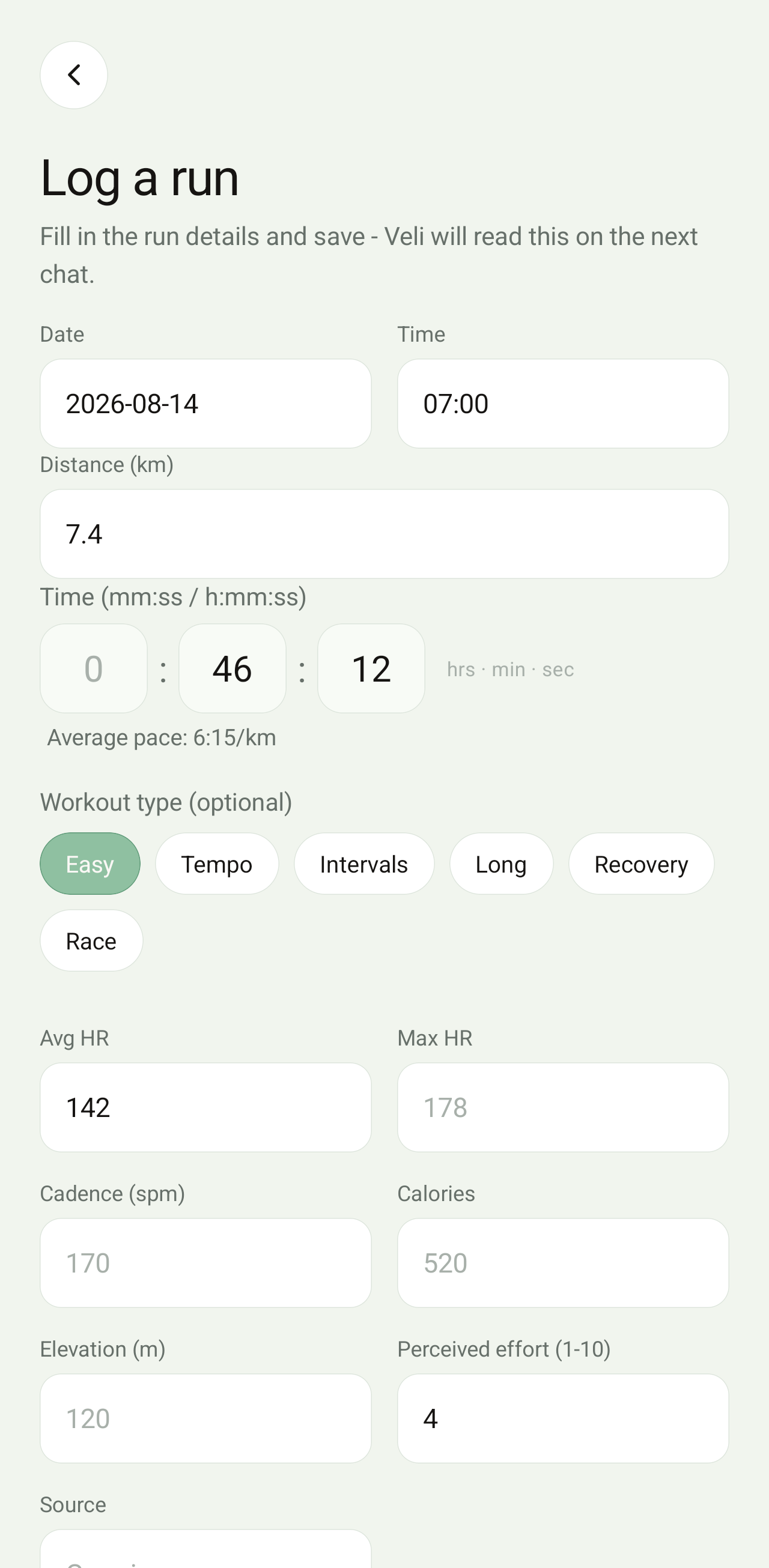
Logging a run is what moves things. The form asks for the two numbers you always have and derives the rest: 7.4 km and 46:12 becomes 6:15 per kilometre while you are still typing, before anything is saved.
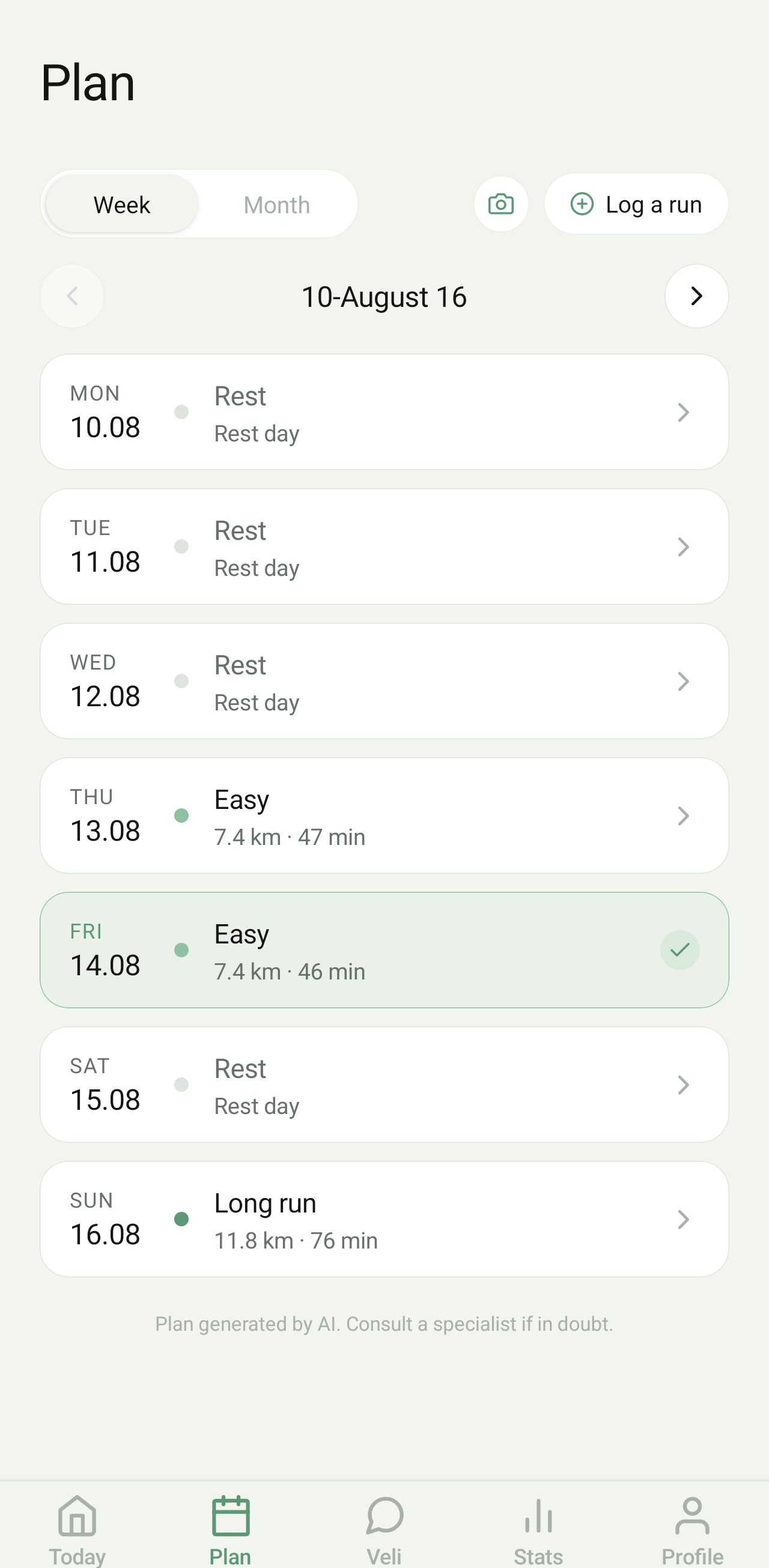
Save it and the run attaches to the session it was meant to be. Friday's planned 47 minutes becomes the 46 it actually took, ticked off, counted.
A performance that beats your previous best raises the fitness value, which re-derives every pace, which changes the sessions still ahead of you. Runs that go badly do the same in the other direction.
This is the difference between a plan and a PDF. A PDF is a prediction made once, on the day you downloaded it, about a runner who had not trained yet.
What it cannot do
- Know how you slept. The daily check-in exists because a plan written last week cannot see today.
- Replace a coach who watches you run. Nothing here sees your form, and form is where a lot of injuries start.
- Fix a goal that does not fit the calendar. If the race is eight weeks out and the base is not there, the plan is honest about being a sharpening block rather than pretending otherwise.
In short
The week you see is the last step of a chain, not a template with your name on it. The parts worth checking are whether the long run sits on a day you can actually run it, and whether the easy pace feels too slow, because it usually should.
Try it yourself
The plan is generated the moment setup finishes, so your own version of this is a couple of minutes away.

Keep reading
Product
What Veli Actually Knows About Your Training
An AI coach is only worth the context it has. What Veli reads before answering, and a real question answered from a plan built minutes earlier.
Product
What Velapp Asks Before It Writes Your Plan
Eleven steps, nine of them questions. What each one changes in the plan that comes out, and the one that matters more than the rest.