
Product
What Veli Actually Knows About Your Training
Published on August 13, 2026
A chatbot bolted onto a training app can tell you what a threshold run is. That is a search result with a friendlier tone. The question worth asking is what it knows about your training before it opens its mouth. Here is a real exchange, on an account set up minutes earlier.
The question
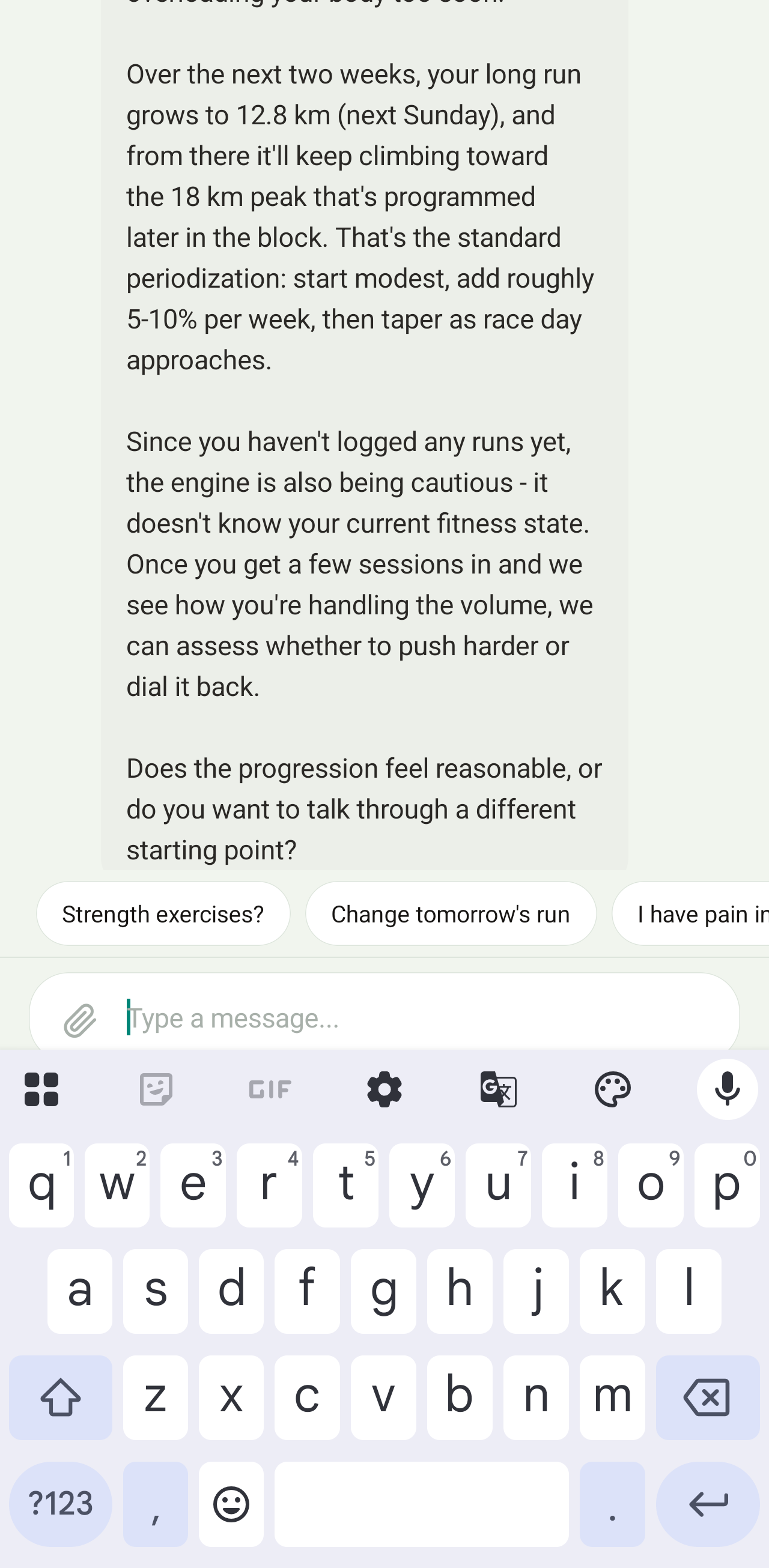
The plan had just been generated for a half marathon. Sunday's long run came out at 11.8 km, which for a 21 km race looks light enough to be worth challenging. So that is what I asked.
What the answer contained
Read the reply and count the things it could only know by looking:
- Which week of which block. "Week 1 of a 14-week base-building phase" is the phase timeline, not a guess about beginners.
- The next session in the sequence. It named 12.8 km for the following Sunday, which is the number actually sitting in the plan.
- Where the block is heading. The 18 km peak it mentioned is programmed later in the same plan.
- That the account had no history. "Since you haven't logged any runs yet, the engine is also being cautious" is the honest reason the first week is conservative, and it volunteered it.
None of that is retrievable from a generic model. It comes from the coach being handed the profile, the plan and the recent training before the question reaches it.
Where the numbers come from
This is the part that matters and is easy to get wrong. The coach does not invent training numbers. Paces come from the VDOT calculation, zones from heart rate reserve, and the weekly ceiling from a cap the engine applies whatever the conversation concludes.
So the coach explains and adjusts within those bounds rather than producing them. An assistant that could talk itself into a bigger week would be a worse product, not a more capable one.
Changing the week when you feel rough
Reading the plan back to you is the easy half. The question is whether the coach can change it, and what it does with the reason you gave for asking.
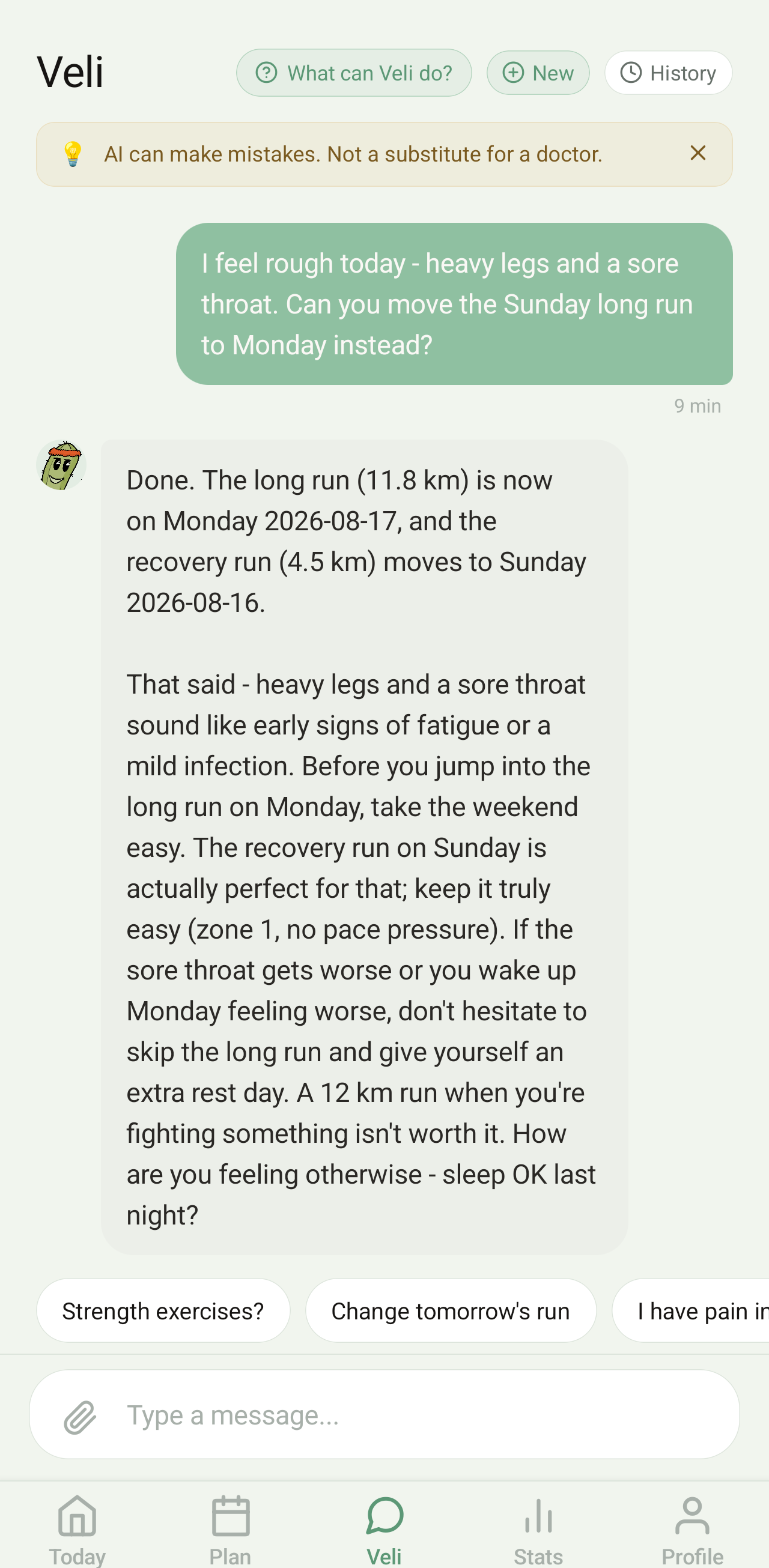
It moved the long run, moved the recovery run into the day that freed up, and then said what it thought of the reason. Heavy legs with a sore throat is grounds for keeping the weekend light, and grounds for skipping Monday too if the throat is worse by then. That is a coach reading the sentence, not a calendar accepting a drag and drop.
Deleting is the harder ask, because it removes a session rather than shuffling it.
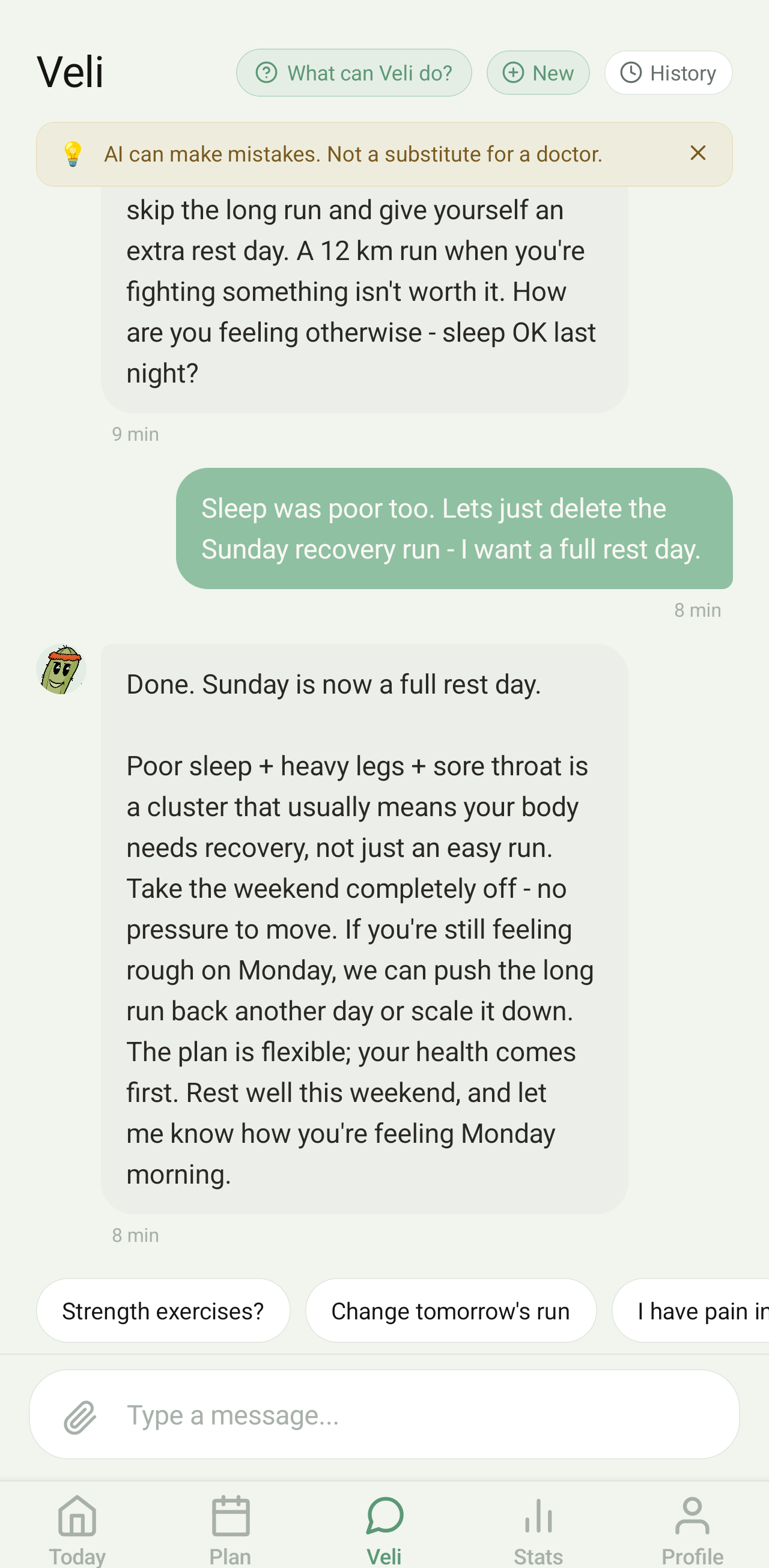
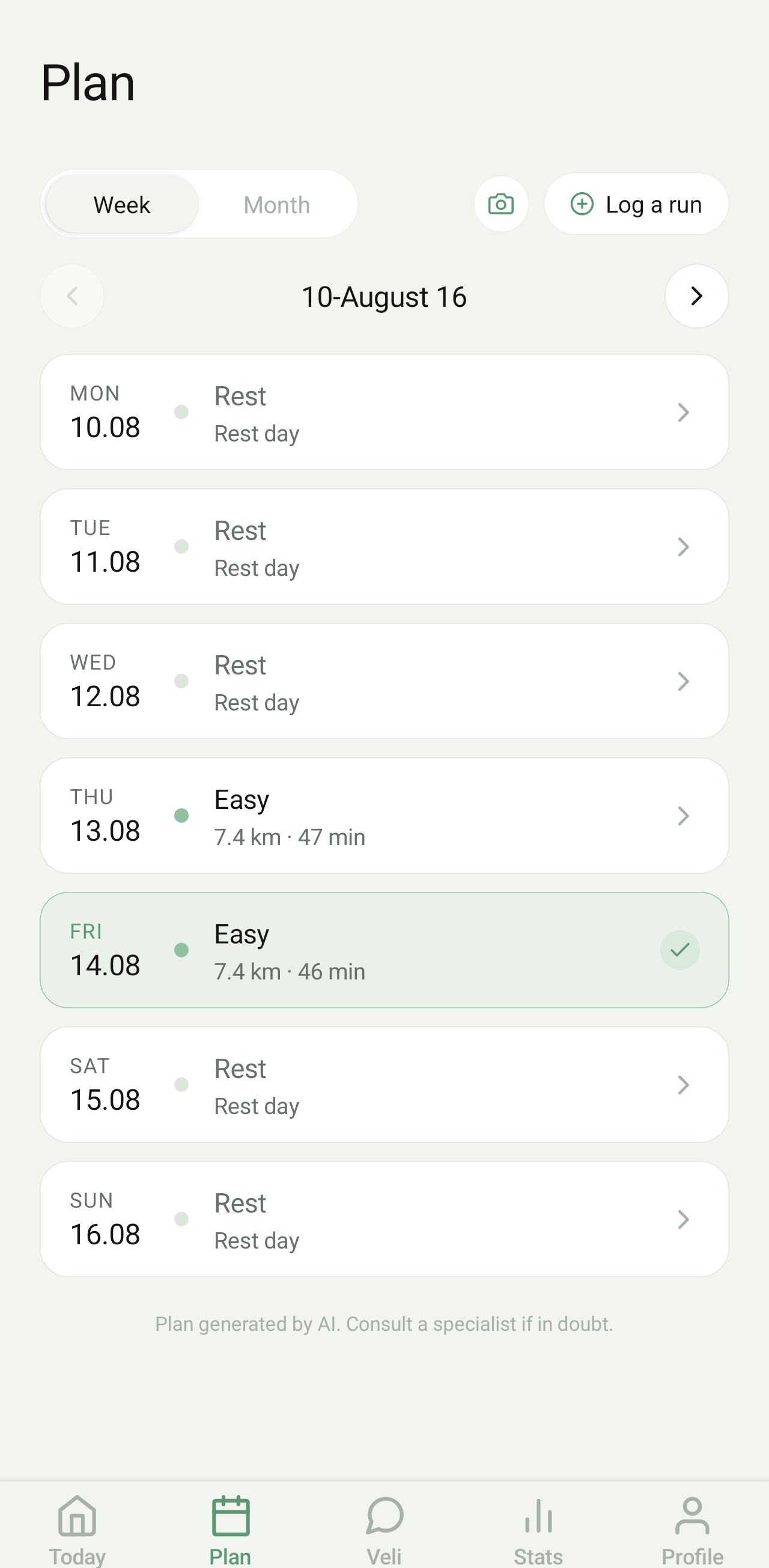
Both are writes, not promises. Close the chat, open the plan, and the week reads back changed: Sunday empty, Friday's run logged against the session it belonged to, the long run gone from this week because it now sits on Monday.
What it remembers between chats
Context read once is not memory. Tell it something you want kept and it writes the note down.
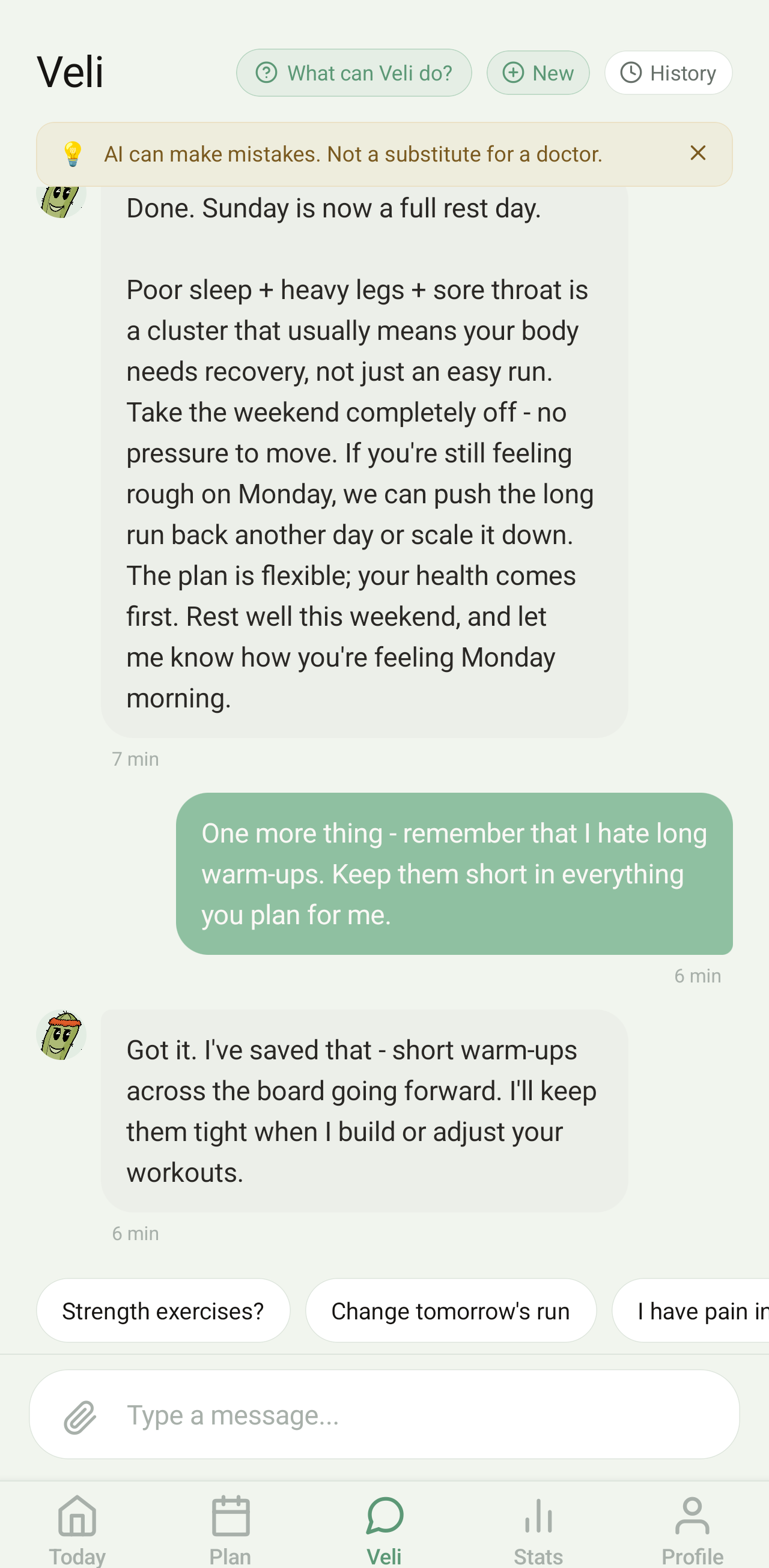
That reply proves nothing on its own. The test is the next conversation, with no history in the window:
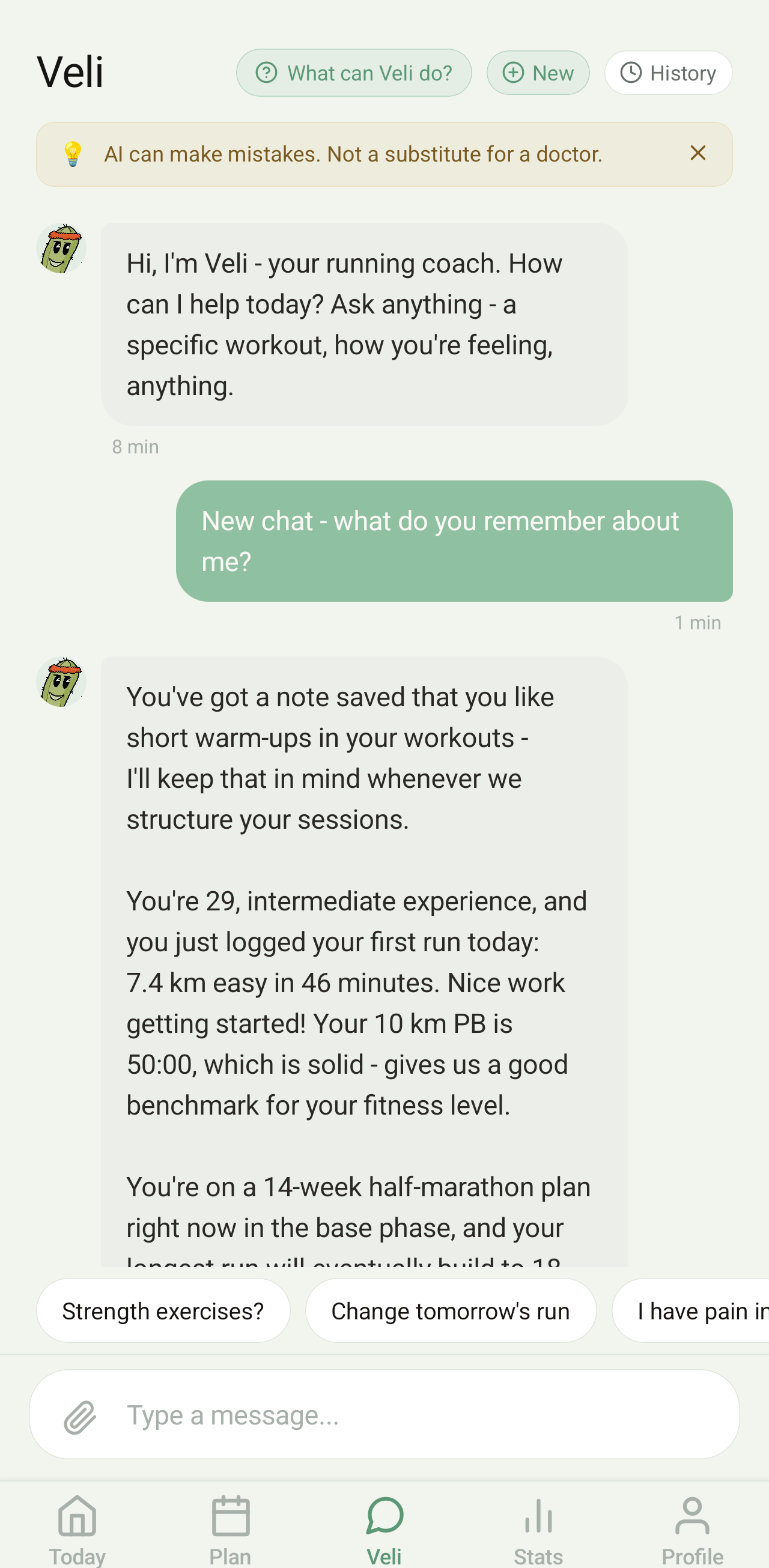
It leads with the note, then the profile and the plan behind it. The split is worth understanding: your runs and your plan are re-read on every message, so they are current by construction. "I hate long warm-ups" survives only because it was written down when you said it, and it will shape sessions written weeks from now.
None of which you have to take on trust, because the notes are a list you can open. It sits in Profile under Veli's memory, on the Pro tier:
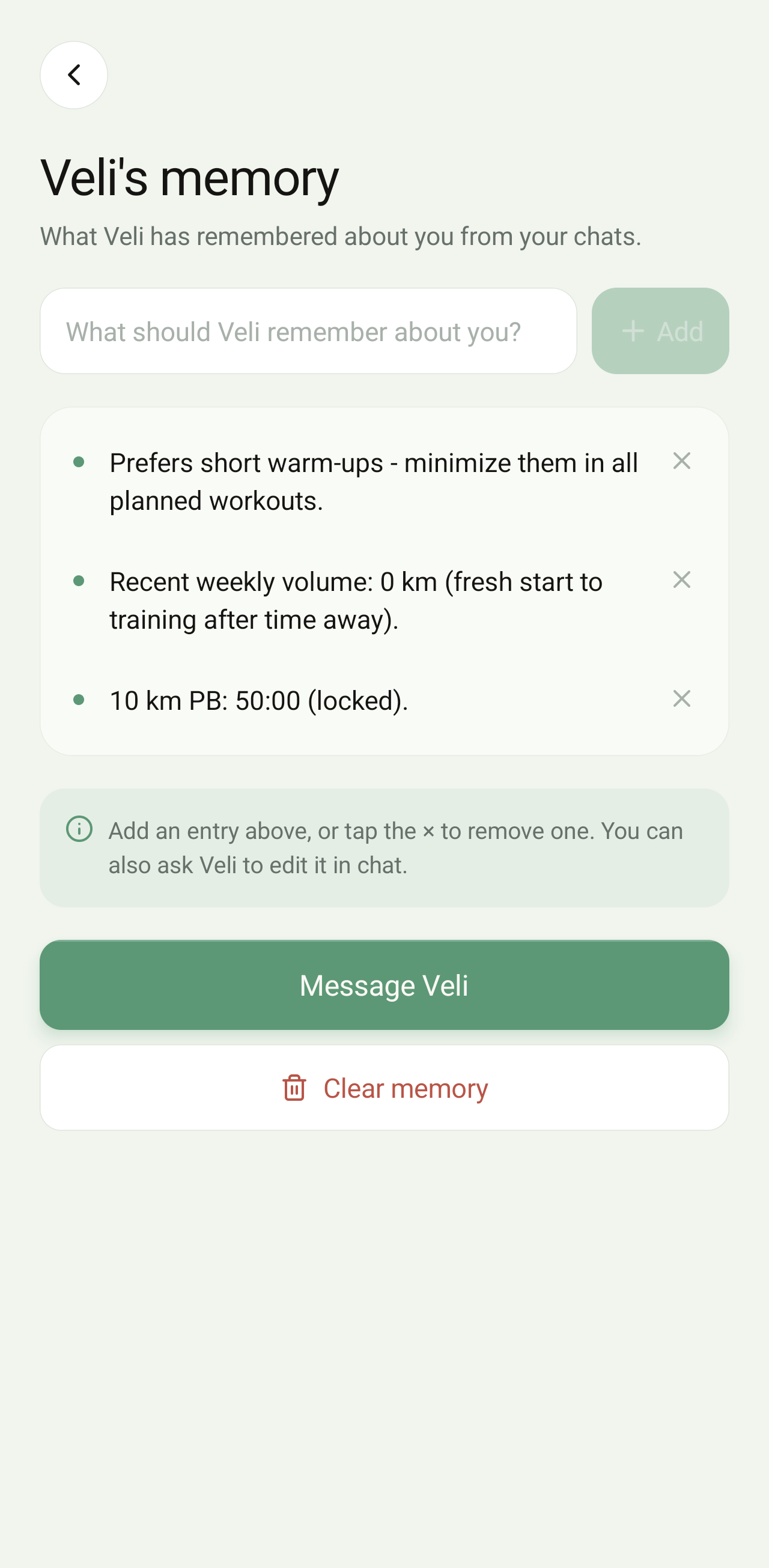
Three lines after a single conversation, and only the first was dictated. The other two the coach decided were worth keeping on its own: that the account is starting from nothing, and the one performance it has to reason from. Each line has an x next to it, you can type a new one straight in, and asking in chat to forget something removes it as well. That last part is the one I would check in any app that claims a memory. Notes you cannot read or delete are not a feature, they are a filing cabinet somebody else owns.
What it will not do
- Diagnose anything. Pain and injury get pointed at a physiotherapist or doctor rather than worked around. The notice above the conversation says so permanently, not in a footer.
- Recommend medication. Not softened, not hedged, not offered as general information.
- Override the volume cap. You can ask for more. The engine still applies the same limit to the week it writes.
The part I would push back on
It answered in about eight seconds, which is fine, but the reply is long. For a question with a two-sentence answer underneath it, that is a lot of scrolling on a phone in the minutes before a run. Length is the honest cost of a coach that explains its reasoning, and whether the trade sits right depends on whether you wanted the reasoning.
It is also only as current as what you log. An account with no runs gets careful, slightly generic advice, exactly as it should, because the alternative is confident advice about a runner nobody has met.
In short
The useful test for an AI coach is not whether it sounds knowledgeable. It is whether it can name the session you are doing on Sunday, say why, and move it when Sunday stops working. Ask yours.
Try it yourself
Setup takes a couple of minutes and the plan is generated the moment you finish, which is all the context the coach needs.

Keep reading
Product
How Velapp Builds Your Week
What decides each session, why the first week is short, and the easy pace that matched Daniels' table without being told to.
Product
What Velapp Asks Before It Writes Your Plan
Eleven steps, nine of them questions. What each one changes in the plan that comes out, and the one that matters more than the rest.